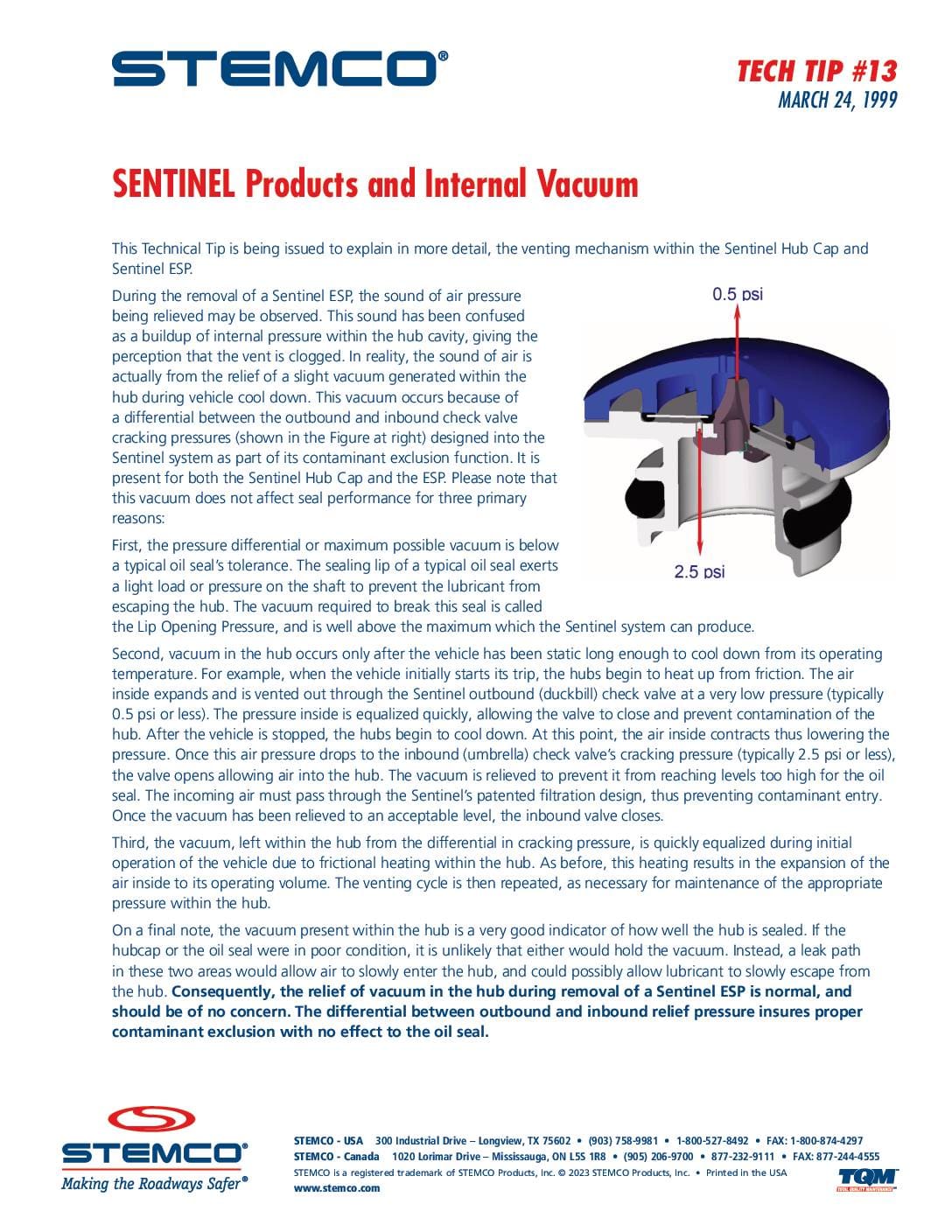
Tech Tip #13 explains the venting mechanism in Sentinel Hub Cap and Sentinel ESP products. It clarifies that the sound of air being relieved during Sentinel ESP removal is not caused by clogged venting or internal pressure buildup. Instead, the sound comes from a slight vacuum created as the hub cools. The guidance explains how outbound and inbound check valve cracking pressures support contaminant exclusion while keeping vacuum levels below typical oil seal limits.
Key Points
- Applies to Sentinel Hub Cap and Sentinel ESP venting behavior.
- Explains that air relief during Sentinel ESP removal is normally caused by slight vacuum, not pressure buildup.
- Describes how outbound and inbound check valves operate during hub heating and cooling.
- Notes that incoming air passes through the Sentinel filtration design to help prevent contaminant entry.
- States that vacuum relief during removal is normal and should not affect oil seal performance.